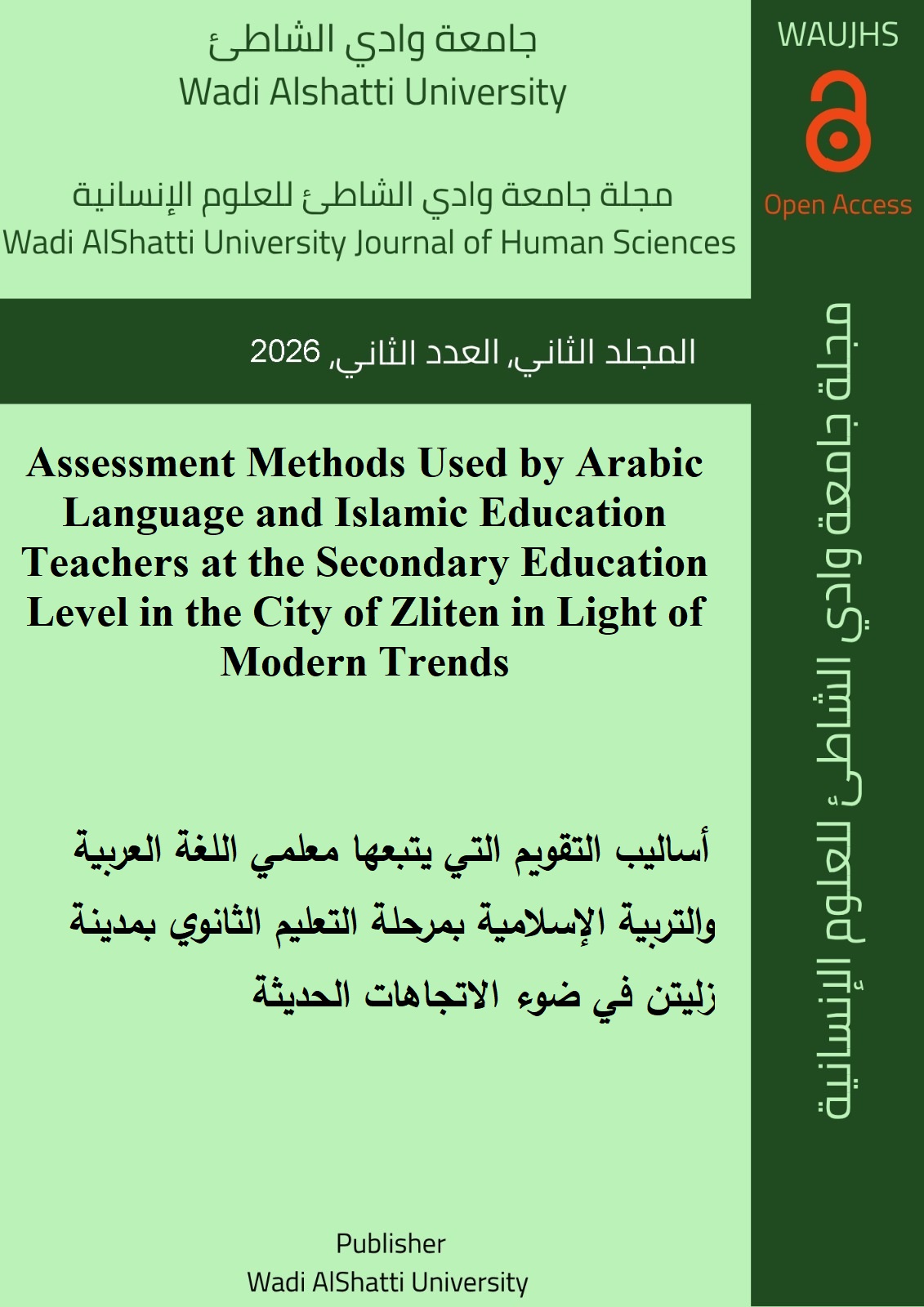
Assessment Methods Used by Arabic Language and Islamic Education Teachers at the Secondary Education Level in the City of Zliten in Light of Modern Trends
DOI:
https://doi.org/10.63318/Keywords:
Assessment Methods, Arabic Language and Islamic Education Teachers, Contemporary TrendsAbstract
The study yielded several findings, the most important of which were as follows: Arabic Language and Islamic Education teachers at the secondary education level in Zliten employed cognitive-domain assessment methods to a high degree, with a particular emphasis on traditional assessment methods, such as oral and written questions and introductory questions posed at the beginning of each lesson. However, shortcomings were identified in the use of assessment methods targeting non-cognitive domains, particularly the affective and psychomotor domains. Furthermore, the assessment methods employed by Arabic Language and Islamic Education teachers in secondary schools in Zliten were not consistent with contemporary trends in educational assessment.
Based on these findings, the researchers made several recommendations, the most important of which were: providing teachers with continuous training on the implementation of modern assessment methods; placing greater emphasis on assessment methods targeting non-cognitive domains (affective and psychomotor); and addressing the obstacles that hinder the effective implementation of these methods.
Downloads
Published
Issue
Section
License

This work is licensed under a Creative Commons Attribution-NonCommercial 4.0 International License.